
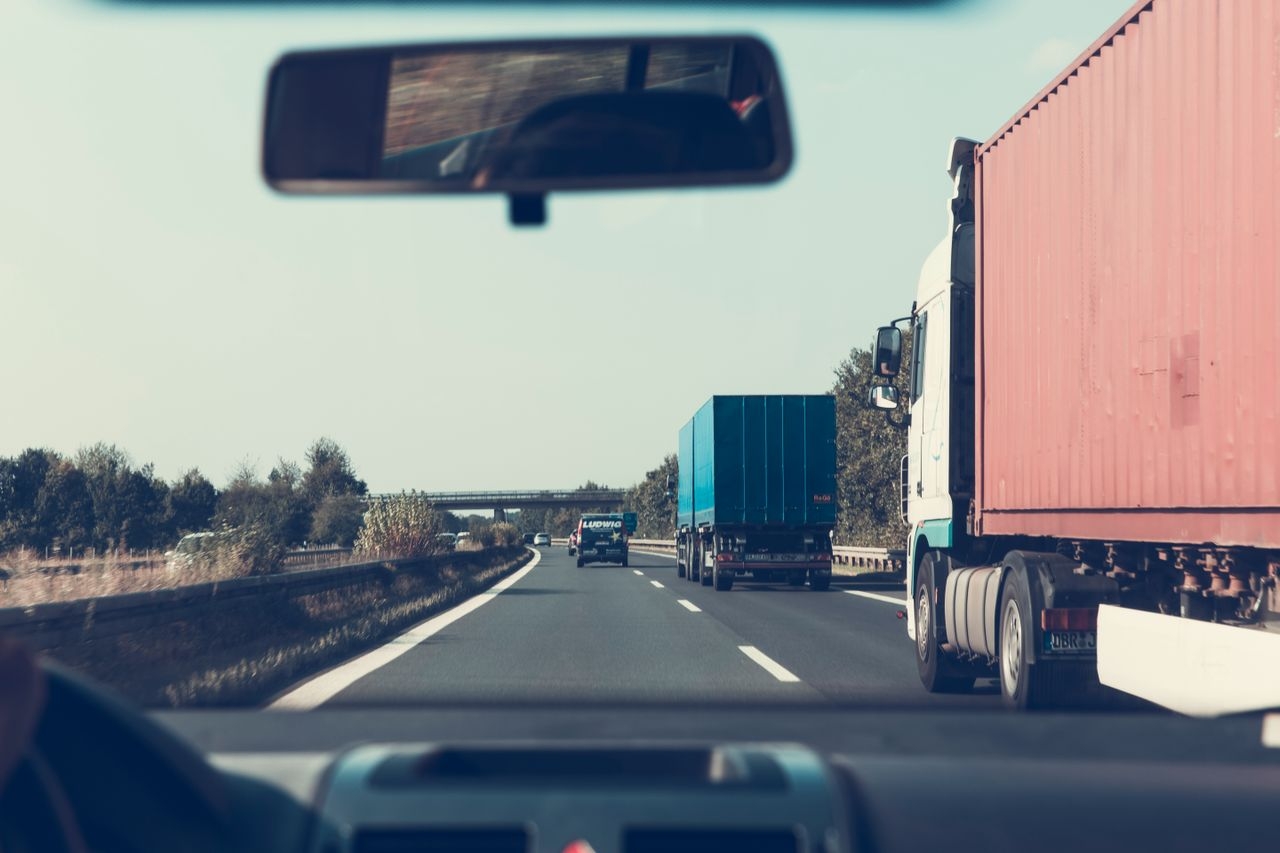
A delivery driver runs a red light, rear-ends your vehicle, or turns across your lane while trying to reach their next stop.
At first, the crash may seem straightforward. You know which vehicle hit you, so you expect the claim to involve the driver and that driver's insurance.
Then you notice the company logo on the vehicle, learn that the driver was making a delivery, or hear that the driver is considered an independent contractor rather than an employee.
That can raise a more complicated question: Is the driver the only person responsible, or could the company connected to the delivery also be legally responsible?
After a car accident involving a delivery driver in New Jersey, determining who may be legally responsible can require more than identifying who was behind the wheel. The driver's relationship with the company, what the driver was doing when the crash happened, who owned the vehicle, and what insurance coverage applies can all become important.
Was the Delivery Driver Responsible for the Crash?
The first question is still how the collision happened.
A delivery driver can be responsible for a crash for the same reasons as any other driver. That can include speeding, following too closely, failing to yield, running a red light, making an unsafe turn, or becoming distracted while driving.
Delivery work can also create circumstances that matter to the investigation. A driver may be following navigation directions, looking for an address, entering or leaving traffic frequently, or making repeated stops along a route.
But the fact that someone was making deliveries does not automatically make the driver negligent.
The evidence still has to show what the driver did and whether that conduct caused the collision.
Once that is established, the next question is whether responsibility stops with the driver.
When Can a Delivery Company Be Responsible?
If the driver was an employee and was acting within the scope of their employment when the crash occurred, the employer can be held responsible for the employee's negligence.
That can make the reason for the trip important.
A driver traveling between deliveries, heading to a customer's address, or performing another task for the employer presents a different situation from someone who has finished working and is using the vehicle entirely for personal reasons.
The company may also face separate questions about its own conduct.
Depending on the circumstances surrounding the incident, an investigation can also examine whether the company knew of relevant driving problems, failed to address known safety concerns, inadequately trained or supervised an employee, or was responsible for maintaining a vehicle involved in the crash.
Those are different theories from simply holding a company responsible for what its employee did. They depend on evidence showing that the company's own conduct contributed to the accident.
What If the Driver Is Hired as an Independent Contractor?
After a delivery-driver crash, another issue may be the driver's relationship with the company that is connected to the delivery. The company may characterize the driver as an independent contractor, which can affect questions about who may be legally responsible for the accident.
That distinction can matter, but the label itself does not necessarily resolve the issue.
Under New Jersey law, a business that hires a true independent contractor generally is not responsible for the contractor's negligence. There are recognized exceptions, including situations in which the business retained control over the manner and means of the work or hired an incompetent contractor when it knew or should have known of the contractor's incompetence.
That makes the actual relationship important.
Questions can include who controlled how the delivery work was performed, what instructions the driver was required to follow, who supplied the vehicle or equipment, and what authority the company exercised over the driver's work.
The point is not that every company using contractors becomes responsible for a crash. It is that an injured person should not assume the answer simply because the driver or company uses the word "contractor."
Does the Name on the Vehicle Tell You Who Is Responsible?
Not necessarily.
A vehicle carrying a restaurant, retailer, courier, or delivery-service logo can make it look obvious who the driver works for. But the name displayed on the vehicle may not tell the whole story.
The driver might work directly for that business. The driver might work for a separate delivery company. The vehicle might belong to the driver, an employer, a fleet company, or another owner.
Those distinctions can matter when identifying the parties involved and the insurance policies that may apply.
Vehicle ownership can also raise separate questions, particularly if the condition or maintenance of the vehicle contributed to the crash. But ownership by itself does not automatically make someone responsible for the driver's negligence.
That is why the investigation has to move beyond the logo on the door.
What Evidence Can Help Identify the Responsible Parties?
After an ordinary two-car collision, exchanging insurance information may seem to answer the basic question of who is involved.
A delivery-driver crash can require more.
The police report and the driver's insurance information are important starting points, but photographs of the vehicle, company markings, license plate, and anything identifying the delivery service can also help establish who was involved.
Other information can become important later, including:
- The driver's work or delivery status at the time of the crash
- Delivery records or route information
- Vehicle registration and ownership records
- Insurance policies covering the driver or vehicle
- Contracts describing the relationship between the driver and company
- Electronic or app-based trip information
- Dashcam or nearby surveillance footage
- Witness statements
For example, if a driver says at the scene that they were in the middle of a delivery, that statement can provide a starting point. Delivery records can then help show whether the driver was actively working and for whom.
The goal is not simply to collect more paperwork. It is to identify the people and businesses whose conduct or legal relationship actually matters to the crash.
Why Identifying the Right Parties Matters to Your Injury Claim
Even when the delivery driver's conduct caused the collision, that may not answer every question about the claim.
If the driver was working for another party, that relationship may affect which parties and insurance coverage need to be considered.
If the driver was classified as an independent contractor, the relationship between the driver and the company may require closer examination.
Vehicle ownership can raise a separate issue. If another person or company owned or maintained the vehicle, that can matter when the vehicle's condition or maintenance contributed to the crash.
Identifying the people, businesses, and insurance coverage connected to the crash can become especially important when the injuries are serious, and the losses continue beyond the initial emergency-room visit.
Medical treatment, time away from work, rehabilitation, ongoing physical limitations, and other consequences can continue long after the collision itself.
Identifying the proper parties early can help ensure that the investigation focuses on the complete circumstances of the crash rather than assuming the driver's personal insurance is the only potential source involved.
What If the Delivery Company Denies Responsibility?
A delivery company may argue that the driver was an independent contractor, was not working at the time of the crash, or was operating a vehicle the company did not own.
A denial like that does not by itself resolve the issue.
The answer can depend on records showing what the driver was doing at the time, how the delivery relationship actually worked, who controlled the work, who owned the vehicle, and what insurance policies applied.
That is why the documents behind the delivery arrangement can matter as much as the name visible at the accident scene.
When Andres, Berger & Tran investigates a delivery-driver accident, those records can help determine which people, businesses, and insurers should be examined as part of the claim.
Injured by a Delivery Driver in New Jersey?
If you were injured by a delivery driver, you may know who caused the crash without knowing who may ultimately be responsible for the resulting injuries and losses.
The driver, an employer, a delivery company, a vehicle owner, or another party may need to be examined depending on how the delivery arrangement worked and what caused the collision.
At The Law Offices of Andres, Berger & Tran, we investigate serious motor vehicle accident claims by looking at how the crash happened, what the driver was doing at the time, who controlled the delivery work, who owned the vehicle, and what insurance coverage may apply.
If you or a loved one was injured in a delivery-driver accident in Camden County, Burlington County, Gloucester County, elsewhere in South Jersey, or anywhere in New Jersey, contact Andres, Berger & Tran to discuss what happened and learn more about your legal options.
Disclaimer: This blog is provided for general informational purposes only and is not legal advice based on your individual circumstances. Reading this article does not create an attorney-client relationship.